Latest articles
Why we write these
Most people searching for an eye supplement are really trying to solve a problem: tired eyes after work, trouble reading menus in dim restaurants, or worry about a parent’s macular degeneration. A capsule may help a little; the right habits and the right check-ups help a lot more.
These articles are not sales pages. They link to Visivra only where it is genuinely relevant, and they always point you to an eye-care professional for symptoms.
The five habits that matter most
Across the sources we use, the same advice comes up again and again. The CDC and MedlinePlus both recommend:
- Regular comprehensive dilated eye exams — many eye diseases have no early symptoms.
- Screen breaks — look about 20 feet away for 20 seconds every 20 minutes.
- A diet rich in leafy greens, colourful vegetables and fish.
- Sunglasses that block UV-A and UV-B, and protective eyewear for sports and DIY.
- Not smoking, and managing blood sugar, blood pressure and weight.
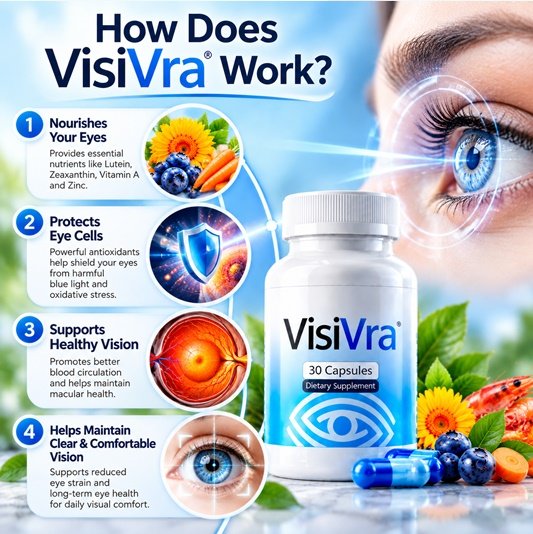
If you are comparing eye-support supplements, our full Visivra review covers the formula, the research and the limits in one place.
When to see an eye doctor urgently
Don’t wait or self-treat if you notice sudden vision loss, double vision, blurred vision with eye pain, flashes of light, a shower of new floaters, or halos around lights. MedlinePlus lists these as reasons for prompt evaluation by an eye-care specialist.
If you are comparing eye-support supplements, our full Visivra review covers the formula, the research and the limits in one place.
Frequently asked questions
How often should I get an eye exam?
It depends on your age, risk factors and health. People with diabetes should have a dilated exam every year. Ask your eye-care professional what schedule suits you.
Can supplements replace eye exams?
No. Exams catch diseases such as glaucoma and diabetic eye disease before symptoms appear. Supplements cannot do that.
What is the single best habit for eye health?
There isn’t just one, but not smoking, regular exams and a vegetable-rich diet have the strongest support.
Sources
- CDC — Preventing Vision Loss
- MedlinePlus — Eye Care
- American Academy of Ophthalmology — Computers, Digital Devices, and Eye Strain
Every source above was opened and checked when this page was last updated (October 18, 2026).
*These statements have not been evaluated by the Food and Drug Administration. Visivra is not intended to diagnose, treat, cure, or prevent any disease. This page is general information, not medical advice — talk to your doctor or eye-care professional before starting any supplement, especially if you are pregnant, nursing, take medication or have an eye condition.