What is digital eye strain?
Digital eye strain (sometimes called computer vision syndrome) is a group of symptoms that appear during or after long periods of screen use:
- tired, aching or burning eyes;
- dry or watery eyes;
- blurred vision, especially when looking up from the screen;
- headaches and neck or shoulder discomfort.
These symptoms are usually temporary and ease after rest. The American Academy of Ophthalmology says screen use won’t cause permanent damage to your eyes.
Why screens tire your eyes
Three things happen when you stare at a screen:
- You blink less. The AAO notes people normally blink about 15 times a minute but only 5–7 times a minute while using screens. Fewer blinks mean a drier eye surface.
- Your focusing muscles work non-stop. Holding focus at a fixed near distance keeps the ciliary muscle inside your eye contracted for long periods.
- Glare and contrast strain your eyes. A screen much brighter or darker than the room around it makes your eyes work harder.
The 20-20-20 rule
The CDC recommends resting your eyes during screen time: every 20 minutes, look at something about 20 feet away for 20 seconds.
Why it works: looking into the distance lets the focusing muscle relax, and the pause is a natural moment to blink fully. Tips to make it stick:
- set a repeating 20-minute timer or use a break-reminder app;
- pick a “20-foot spot” — a window, a door across the room;
- pair the break with three slow, full blinks.
If you are comparing eye-support supplements, our full Visivra review covers the formula, the research and the limits in one place.
Fix your screen setup
The AAO recommends:
- Distance: sit about 25 inches (roughly an arm’s length) from your screen.
- Angle: position the screen so your eyes gaze slightly downward.
- Brightness: match screen brightness to the surrounding light.
- Contrast: increase screen contrast to reduce strain.
- Glare: use a matte screen filter if reflections are a problem.
Bigger text helps too — if you find yourself leaning in, zoom in instead.
Help dry eyes
- Blink on purpose, especially during long reading or gaming sessions.
- Use lubricating eye drops (artificial tears) when your eyes feel dry, as the AAO suggests.
- Add a humidifier if your room is warm and dry.
- Point fans and air vents away from your face.
- If you wear contact lenses, give your eyes regular lens-free time and follow your eye-care professional’s hygiene advice.
Check your glasses
Uncorrected or outdated prescriptions are a common hidden cause of eye strain. Many people over 40 also start to need help with near focus (presbyopia). The AAO notes that computer glasses are designed for the intermediate distance of a screen, about 20–26 inches, and are not the same as “blue light blocking” glasses. An eye exam can tell you whether you’d benefit.
Kids, teens and gamers
Children and teenagers often spend hours on phones, tablets and consoles, and they are less likely to notice or mention eye strain. The same rules apply: regular breaks, good lighting, a sensible distance from the screen and time outdoors. If a child squints, rubs their eyes, holds devices very close or complains of headaches, book an eye test — they may need glasses.
Where supplements fit in
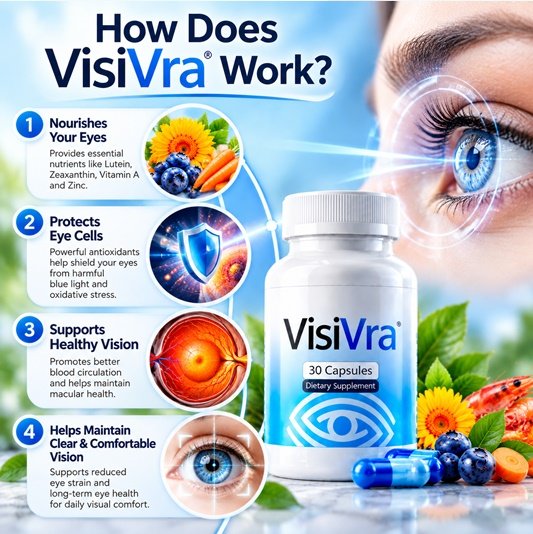
Habits come first. Some people also ask whether nutrients can help. Lutein and zeaxanthin build the macular pigment, and one small, industry-funded 2023 trial found astaxanthin (9 mg/day for six weeks) was linked with less drop in visual acuity after screen work in people over 40. That evidence is modest. Supplements such as Visivra are, at most, an addition to the steps above — never a substitute.
When to see an eye doctor
Book an eye exam if strain continues despite these changes, if you get frequent headaches, or if you notice your vision changing. Seek urgent care for sudden vision loss, flashes, a shower of floaters or a painful red eye.
If you are comparing eye-support supplements, our full Visivra review covers the formula, the research and the limits in one place.
Frequently asked questions
Does the 20-20-20 rule really work?
It gives your focusing muscles a rest and prompts you to blink, which addresses two main causes of screen strain. The CDC recommends it.
Can screens damage my eyes permanently?
The American Academy of Ophthalmology says screen use won’t cause permanent eye damage, although it can cause uncomfortable temporary symptoms.
Do blue light glasses help eye strain?
The AAO distinguishes computer glasses, designed for screen distance, from blue-light-blocking glasses. Breaks, blinking and the right prescription matter most.
How far should my screen be?
About 25 inches, roughly an arm’s length, with your gaze slightly downward, according to the AAO.
Can eye drops help screen strain?
Lubricating drops (artificial tears) can ease dryness. Ask your pharmacist or eye doctor which type suits you.
Sources
- American Academy of Ophthalmology — Computers, Digital Devices, and Eye Strain
- CDC — Preventing Vision Loss
- Sekikawa T. et al. Effects of diet containing astaxanthin on visual function in healthy individuals: a randomized, double-blind, placebo-controlled, parallel study. J Clin Biochem Nutr. 2023;72(1):74–81
Every source above was opened and checked when this page was last updated (October 18, 2026).
*These statements have not been evaluated by the Food and Drug Administration. Visivra is not intended to diagnose, treat, cure, or prevent any disease. This page is general information, not medical advice — talk to your doctor or eye-care professional before starting any supplement, especially if you are pregnant, nursing, take medication or have an eye condition.