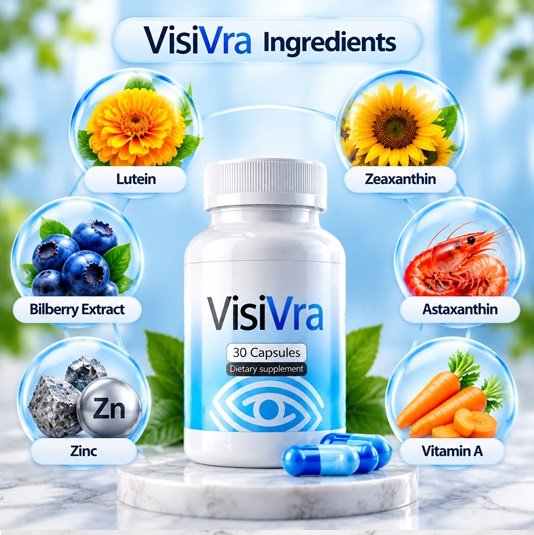
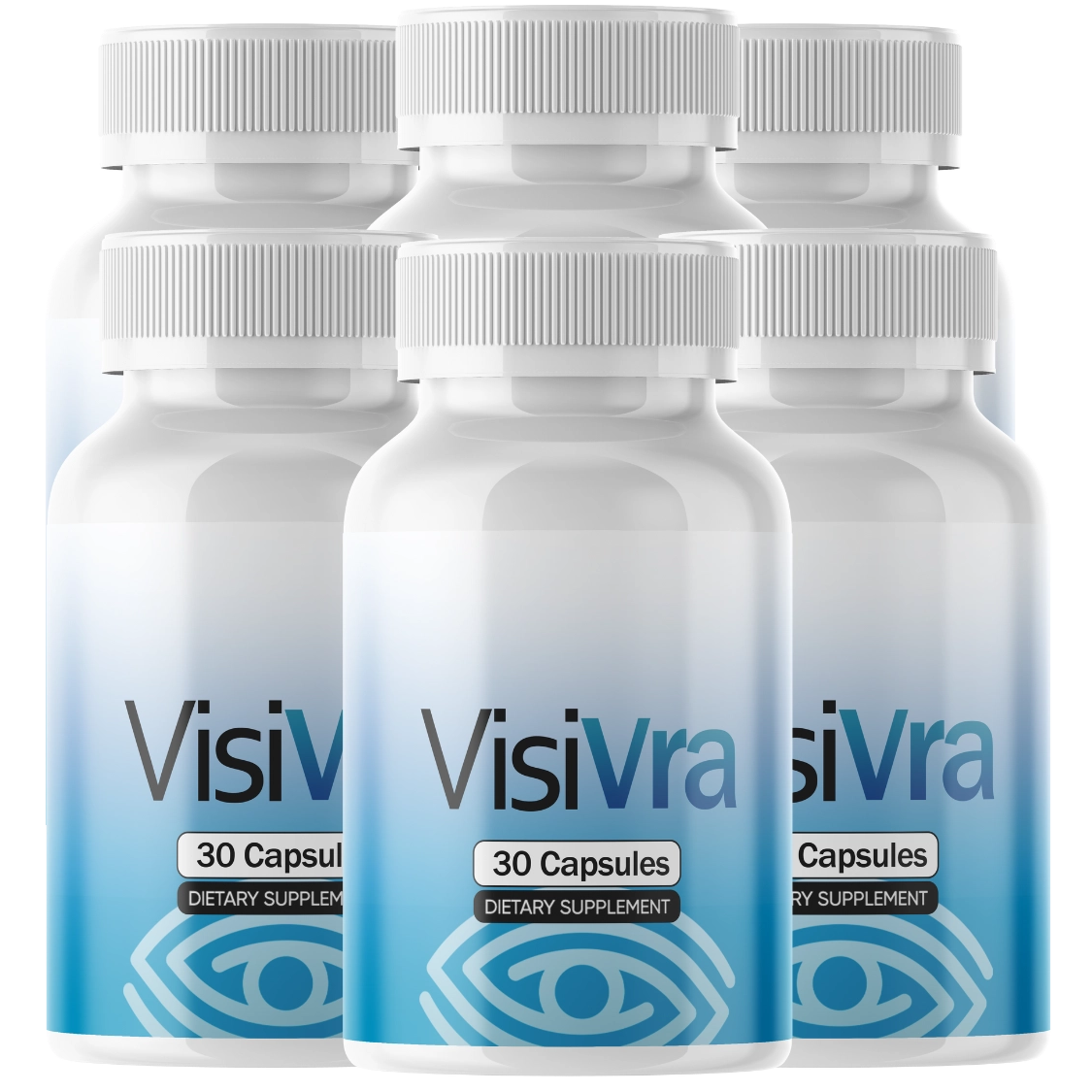
Bundles start at $49 per bottle on the 6-bottle option, with a 60-day money-back guarantee from the purchase date.
Check Visivra PricePaid linkZeaxanthin at a glance
| Fact | Detail |
|---|---|
| Type | Carotenoid (xanthophyll) |
| Where it acts | Centre of the macula (fovea), lens |
| Main role | Macular pigment; blue-light filter; antioxidant |
| Food sources | Yellow corn, orange and yellow peppers, egg yolk, goji berries |
| Studied doses | 2 mg/day in AREDS2; 0–10 mg/day in trials |
| Dose in Visivra | Not published — check label |
| Evidence | Good alongside lutein |
What is zeaxanthin?
Zeaxanthin is a yellow-orange carotenoid with almost the same structure as lutein. Together with lutein and meso-zeaxanthin (which the body makes from lutein), it forms the macular pigment. While lutein spreads more widely across the macula, zeaxanthin and meso-zeaxanthin are most concentrated in the fovea, the tiny central pit that gives the sharpest vision.
How zeaxanthin works
Like lutein, zeaxanthin absorbs blue light before it reaches the light-sensing cones and acts as an antioxidant inside the retina. The Linus Pauling Institute notes the combined macular pigment can absorb up to 90% of blue light, depending on its density. Because zeaxanthin sits right at the centre, it is thought to protect the cells responsible for detailed central vision.
Compare the 2-, 3- and 6-bottle bundles on the seller’s checkout page. Read the label and check with your doctor if you take medication.
Check Visivra PricePaid linkWhat the research shows
Most research tests zeaxanthin together with lutein, so it is hard to separate their effects.
- In AREDS2, 2 mg zeaxanthin plus 10 mg lutein (with other nutrients) reduced progression from intermediate to advanced AMD by about 25%, and AREDS2 replaced beta-carotene with these two carotenoids.
- A meta-analysis summarised by the Linus Pauling Institute, with zeaxanthin doses from 0 to 10 mg/day, found improved visual acuity and contrast sensitivity with lutein and/or zeaxanthin supplements.
- Spinach and kale are rich in lutein but relatively poor in zeaxanthin, so some people get much less zeaxanthin from food than lutein.
How much zeaxanthin has been studied?
| Context | Zeaxanthin dose |
|---|---|
| AREDS2 (with 10 mg lutein) | 2 mg/day |
| Trials in meta-analysis | 0–10 mg/day |
The usual ratio in eye formulas is about 5 parts lutein to 1 part zeaxanthin, mirroring AREDS2.
Food sources
- Yellow and orange bell peppers
- Yellow corn and cornmeal
- Egg yolks (well absorbed)
- Goji berries
- Persimmons and orange-coloured squash (smaller amounts)
Eat them with a little fat for better absorption.
Side effects and safety
Zeaxanthin is generally well tolerated at studied doses. AREDS2 used 2 mg/day long term. As with lutein, very high carotenoid intake can give skin a harmless yellowish tint. Pregnant and breastfeeding women, and anyone with a medical condition, should check with a doctor before using supplements.
Interactions
No significant drug interactions are well established. Fat-absorption blockers such as orlistat may reduce absorption of fat-soluble carotenoids. Avoid stacking several eye supplements that each contain zeaxanthin and lutein.
Why lutein-only products may fall short on zeaxanthin
Some eye supplements contain lutein alone and rely on the body to supply zeaxanthin. The body does convert some lutein into meso-zeaxanthin in the macula, but dietary zeaxanthin itself comes only from food or supplements. Because the most popular “eye foods” — spinach and kale — are rich in lutein but relatively poor in zeaxanthin, people who rely on those greens may get a lot of lutein but little zeaxanthin. A formula that lists both, as Visivra does, follows the AREDS2 model more closely. When you compare products, look for both carotenoids and their doses on the label.
Zeaxanthin’s role in Visivra
Including zeaxanthin with lutein is standard, evidence-based practice. It completes the macular-pigment pairing used in AREDS2. A label showing about 2 mg zeaxanthin with about 10 mg lutein would match the research. [Visivra zeaxanthin dose from label]
Bottom line
Zeaxanthin is a sensible partner to lutein, concentrated where sharp vision happens. Its evidence comes mainly from combination studies, which are positive for macular pigment and for slowing intermediate AMD. It is a good sign that Visivra includes it; the dose is the detail to check.*
Visivra is sold through the seller’s own checkout (BuyGoods). Confirm the total, shipping and guarantee terms before you pay.
Check Visivra PricePaid linkFrequently asked questions
What is the difference between lutein and zeaxanthin?
They are closely related carotenoids. Lutein spreads across the macula; zeaxanthin is concentrated in its very centre. They are usually taken together.
How much zeaxanthin is in AREDS2?
2 mg per day, with 10 mg lutein.
Can I get zeaxanthin from food?
Yes — yellow corn, orange and yellow peppers and egg yolks are good sources.
Is zeaxanthin safe?
It is generally well tolerated at studied doses, including long-term use in AREDS2.
How much zeaxanthin is in Visivra?
Not published on the sales page. Check the label.
Sources
- Linus Pauling Institute, Oregon State University — Carotenoids
- National Eye Institute — Age-Related Eye Disease Studies (AREDS/AREDS2): major findings
Every source above was opened and checked when this page was last updated (October 18, 2026).
*These statements have not been evaluated by the Food and Drug Administration. Visivra is not intended to diagnose, treat, cure, or prevent any disease. This page is general information, not medical advice — talk to your doctor or eye-care professional before starting any supplement, especially if you are pregnant, nursing, take medication or have an eye condition.